
Poker Alice: The Woman Behind the Cigar
A working card player's long life became a winning-streak legend. The surviving record tells a more complicated story.
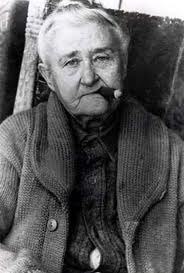
The cigar is the easiest part of Poker Alice to remember. The harder part is separating a working woman's life from the claim that she could hardly lose. Alice Ivers played poker and faro, travelled through western gambling towns and eventually ran a business near Sturgis. Later retellings turned that career into something close to a permanent winning streak.
I would keep the woman and put the winning streak under the magnifying glass.
Work, family and the table
Accounts of Alice's early life differ, including her birth year and the timing of her travels. Biographer Liz Duckworth has specifically challenged the familiar claim that Alice was in Deadwood with Wild Bill Hickok in 1876. That is a useful warning: two famous names appearing in the same tourist story does not put them in the same room.
The broader outline is firmer. Alice earned money at cards, married Warren Tubbs and raised a family. A South Dakota Oral History Center account, drawing on a later interview with her friend Katherine Soldat, remembers both her generosity and her refusal to gamble on Sundays. Oral recollection supplies a perspective, not a complete ledger.
The record becomes less picturesque
Prairie Public reproduces a 1913 newspaper account of a shooting outside her establishment, in which one soldier died and another was wounded. The report describes accusations and an arrest. It should not be mistaken for a full account of the eventual court outcome.
Later, Governor William J. Bulow pardoned Alice. His autobiography defended the decision and described the criticism it attracted; the scholarly edition also points out what his version omitted. She died in 1930. The portrait that remains is of a complicated businesswoman, not a mascot for effortless winnings.
What the Bandit takes from it
A colourful winner is easy to market. A complete account of the costs is harder to find. Claims about lifetime winnings rarely tell us what was staked, lost or spent along the way. Alice deserves a place in the archive because she was a real person navigating a difficult trade. She does not need an invented guarantee attached to her name.
Sources and historical notes
Researched 2026-10-30. Contemporary reports, memoirs and later histories are identified separately in the story. The Bandit's closing interpretation is editorial commentary.