
Soapy Smith: The Con King of Skagway
He ran a gold rush town on rigged games and a fake telegraph office, until the town ran out of patience.
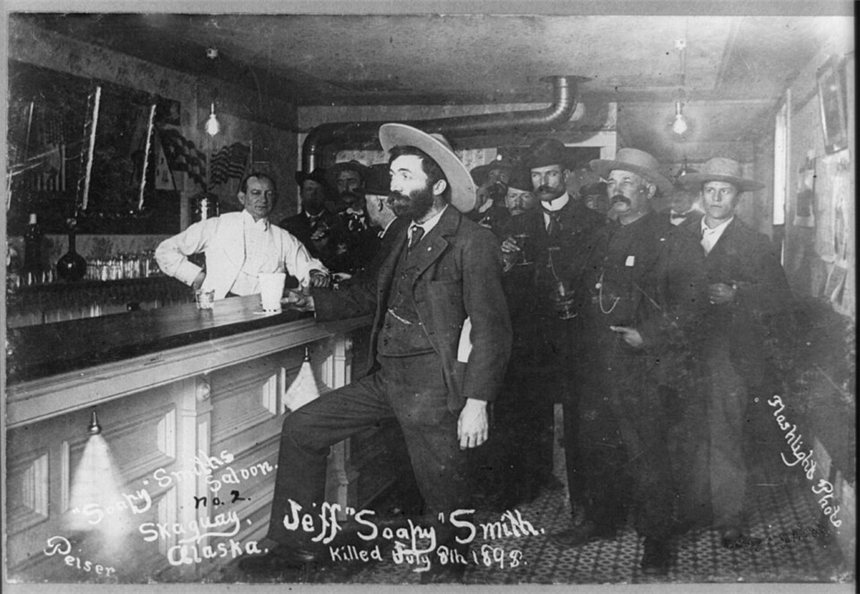
Jefferson Randolph Smith II got his nickname from a street con he ran in Denver in the 1880s, and the con explains the man. He would stand on a corner selling bars of soap, theatrically wrapping paper money, up to a hundred dollars, around a few of the bars before burying them in the pile. The crowd bought soap at wildly inflated prices for the chance at the money bars. The winners, every time, were his own men, planted in the crowd. Nobody else ever unwrapped a dollar. The police blotter recorded him as Soapy, and it stuck for life.
Soapy scaled the soap racket into an empire. In Denver, and then in the silver boomtown of Creede, he ran networks of rigged poker games, crooked dice, shell games and fake lottery offices, all staffed by a payroll of shills, and all protected by bribed officials. When the money moved north with the Klondike gold rush, so did he.
A telegraph office with no telegraph
Skagway, Alaska, 1897: the last stop before the gold fields. Soapy's operation there included his saloon, Jeff Smith's Parlor, and a masterpiece of pure nerve: a telegraph office that charged five dollars to wire messages home. Grateful miners paid, and replies arrived, collect. Skagway had no telegraph line. The wires ran into the wall and stopped. While a mark waited for his message to go through, there was always a friendly card game on offer in the back room.
It ended the way these stories end. In July 1898 his gang relieved a returning miner named John Stewart of a poke of gold in a three-card monte game that turned into simple robbery, and Skagway's vigilance committee finally had enough. On the evening of July 8, Soapy walked down to the Juneau Wharf with a Winchester to break up their meeting. He and guard Frank Reid exchanged shots at point-blank range. Soapy died on the spot; Reid died of his wounds twelve days later, a hero.
What the Bandit takes from it
Soapy's whole business model was one sentence long: control the game, and let the mark believe it is fair. The modern version of the defence against him is also one sentence long: a regulator, a licence number, an audited payout report and a dispute body you can actually reach. That is the entire reason those four things sit in every case file on this site.